The Cookie Era Is Over: A 5-Step Blueprint for Publishers to Win in 2026
2025 made one thing clear for publishers: Cookies will never be the same. Third-party signals are weakening, privacy expectations are rising, and advertisers are asking tougher questions about performance. Revenue still needs to grow, but targeting and measurement can no longer rely on the assumptions that worked just a few years ago.
Even Google Chrome is no longer a stable planning anchor. Reuters reported that Google reversed its plan to fully phase out third-party cookies and is instead moving toward a user-choice model. That decision adds even more variability to what publishers can rely on across browsers, audience segments, and individual sessions. At the same time, market dependency on cookies remains high. eMarketer found that cookies were used for 78% or more of U.S. programmatic ad buys. These shifts explain why the transition is disruptive and why publishers cannot afford to wait to make changes.
The upside is that publishers are not starting from zero. The most valuable asset in the market is a direct relationship with your audience. The publishers that will win in 2026 will treat that relationship like a business asset. They will turn first-party signals into addressable audiences, activate those audiences across channels, and prove outcomes in ways that keep advertisers spending.
1. Is your audience data connected across channels?
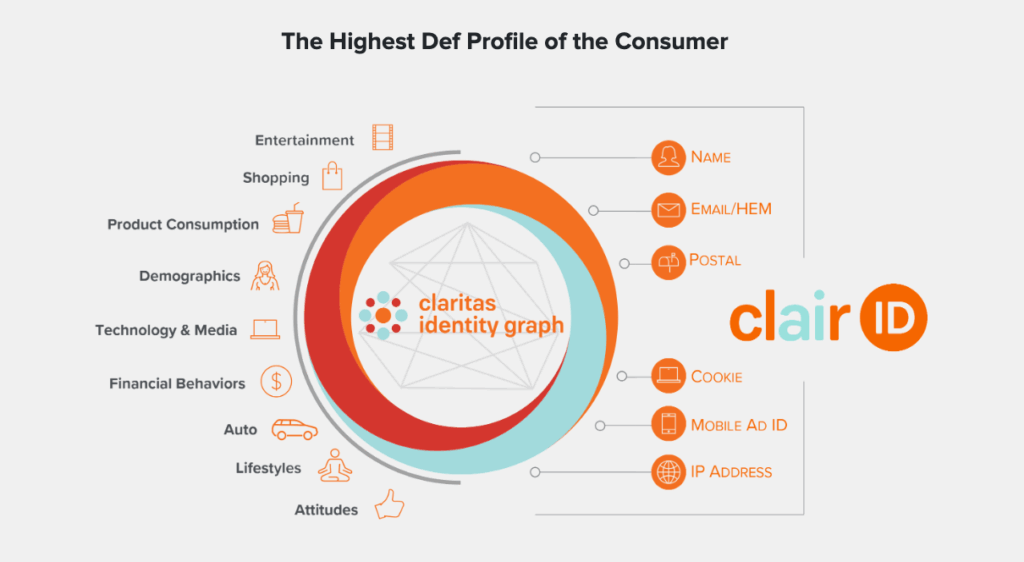
Most publishers are now multi-platform. Your audience shows up on web, in app, on streaming, in newsletters, in podcasts, and sometimes even in offline touchpoints like events or direct mail. When those interactions occur in separate systems, decisions are made based on partial views of the same person. This leads to wasted frequency, broken targeting, and reporting that falls apart when cookies fail. The fix is connecting first-party signals into a consistent consumer and household view. When identity is unified, audiences can be recognized across environments, and segments remain usable across channels. This is how publishers can move from selling inventory to selling addressable, measurable audiences.
Claritas in action: The Claritas Identity Graph provides the foundation for this approach. It resolves identity at scale and keeps it consistent across channels so publishers can build audiences once and use them everywhere. The practical value is simple: segments do not break when browsers change their rules, and reporting is no longer dependent on a single fragile identifier.
2. Are you segmenting beyond demographics?
Advertisers pay premiums for predictable behavior. This is where your 2025 data becomes an advantage. Look back at last year’s campaigns and ask the right questions. Which audiences converted? What content environments drove performance? Where did frequency help, and where did it waste spend? Those answers should define your highest-value segments for 2026.
Claritas in action: ConneXions Premier and AI Audiences translate identity into sellable segments built on real behaviors, media patterns, and lifestyle signals. The result is not just insight, but a repeatable segmentation framework your ad sales and marketing teams can package, sell, and measure with confidence.
3. Can you activate your best audiences everywhere advertisers spend?
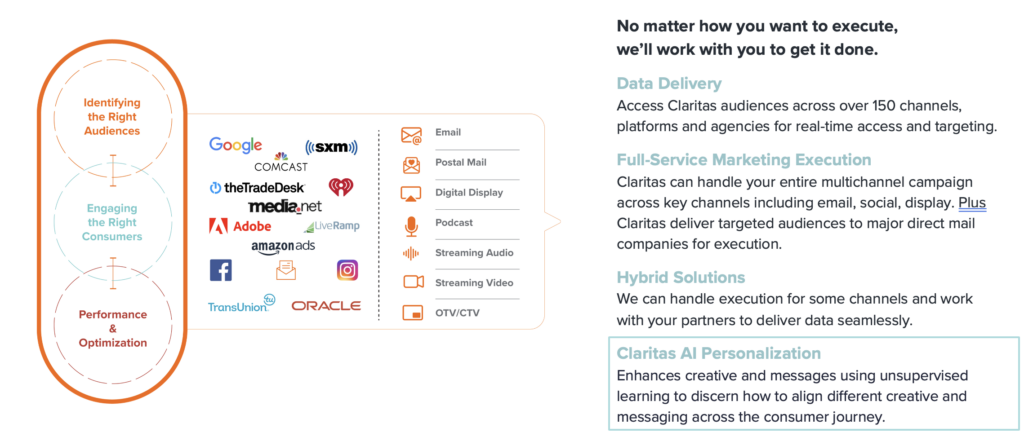
Advertisers rarely buy a single channel. They expect cross-channel reach with consistent targeting and measurement. If it takes weeks to activate an audience, it is not monetizable at the speed the market demands today.
This shift is already happening. The IAB State of Data 2025 report shows that as signals disappear, adoption of first-party data, alternative IDs, and clean rooms is increasing.
For 2026, the goal is simple. Build audiences that activate easily where budgets already flow, including programmatic, social, streaming, and email. The easier activation becomes, the easier it is to package, sell, and renew.
Claritas in action: Digital Audiences and Email move segments from insight to execution across paid and owned channels. When activation is reliable, publishers stop selling one-off placements and start selling scalable, repeatable audience solutions.
4. Are you using privacy-safe collaboration to create premium partnerships?
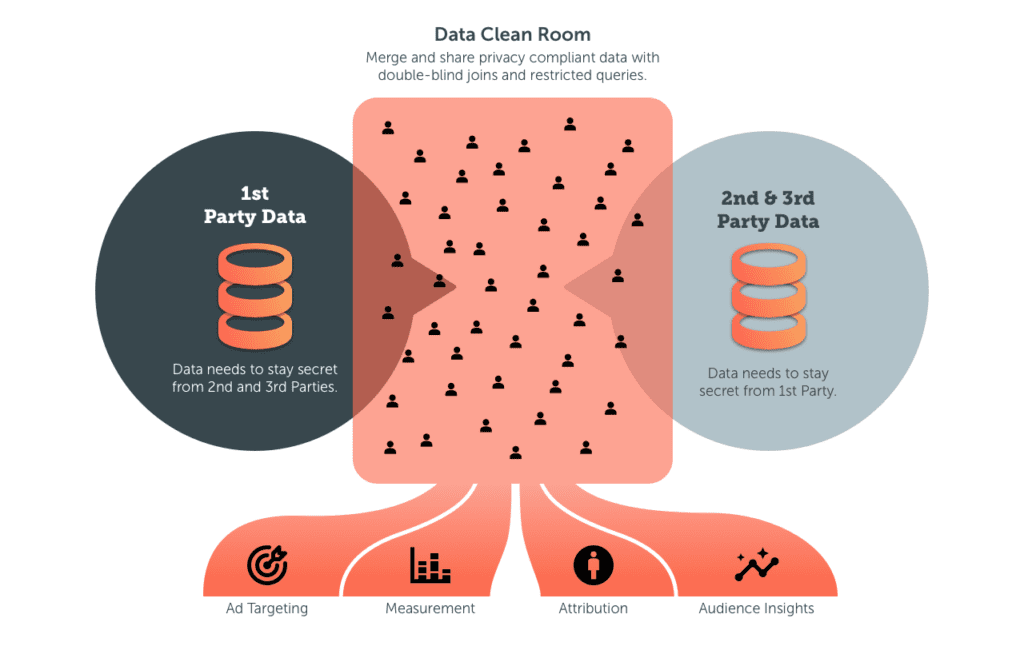
Advertisers want to know who they reached and whether it worked. Publishers need to protect user privacy while still proving value. Clean room collaboration enables both.
Clean rooms allow publishers and advertisers to match and analyze audiences without exchanging raw personally identifiable information. That unlocks premium partnerships by validating audience overlap, creating custom segments, and structuring deals backed by shared insights.
This is quickly becoming standard practice. A Digiday survey, found that 64% of publishers are collaborating with advertisers via clean rooms to plan campaigns and measure performance.
Claritas in action: Claritas Digital supports privacy-safe collaboration through clean room-style workflows, making it easier to build premium partnerships grounded in verified audience opportunity and measurable outcomes.
5. Are you proving outcomes and optimizing, or just reporting clicks?
Clicks are easy to report, but they do not give the full story.
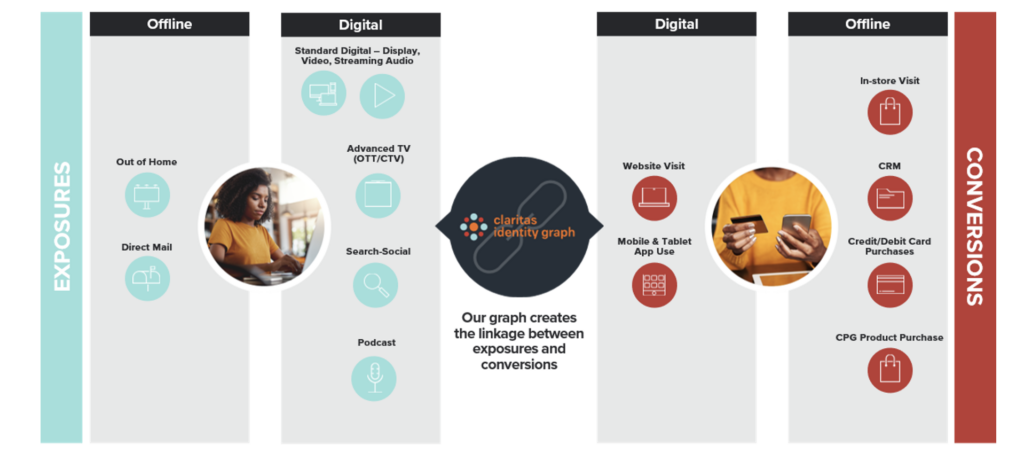
Advertisers care about outcomes such as subscriptions, purchases, store visits, applications, and conversions. Publishers who can connect exposure to these outcomes earn larger budgets and stronger renewals. Measurement must also be actionable. Reporting after a campaign ends is no longer enough. The strongest publisher partners help advertisers optimize while campaigns are live.
Claritas in action: Broadcast Attribution connects exposure to outcomes across digital and traditional media. The AI Optimization Platform then uses performance signals to improve campaigns in real time, moving publishers from reporting activity to proving revenue impact.
Key Takeaways
A 2026 publisher growth plan does not need to be complicated. It needs to be connected. That means unifying audience data, building segments advertisers value, activating those audiences where budgets live, collaborating in privacy-safe ways, and proving outcomes so optimization and renewal become the default. Claritas supports this full-loop journey, from identity and segmentation through activation and outcome-based measurement.
If you want to turn your 2025 performance into a 2026 growth engine, Claritas can help you build an audience foundation and revenue system designed to hold up in a cookieless world.
Need help finding your next customer?
Questions
Please contact the Claritas Sales Team at866-ROI-TEAM (866-764-8326)
Current Clients
Please contact the Solution Center at855-400-ASST (855-400-2778) for immediate assistance